
Supplementation Guide
How to choose, prescribe or review the use of dietary supplements? Who needs them? Which ones can improve your health, which ones can harm you, and which ones simply don’t work?

What are supplements?
As a board certified specialist in Pharmaceutical Medicine, I have spent years learning how medicines and other substances impact and influence processes in human bodies.
In the realm of healthcare, supplement use among patients presents a varied landscape. Some individuals abstain entirely, forgoing not just prescription medications but also any supplements. On the opposite end, there are people who, despite not taking any medications, boast supplement lists that span pages. Most, however, find themselves somewhere in the middle of this spectrum.
Please note: most healthy people DO NOT need additional supplementation. The overall number of supplements and medicines taken by someone is an indicator of overall health - the more pills you need to take, the worse your health is likely to be.
Please note: Most supplements have NO impact whatsoever on your health. There are more supplements that actively HARM your health than those that can potentially improve it.
Today you will learn how to review, select and adjust supplements for optimal longevity and health.
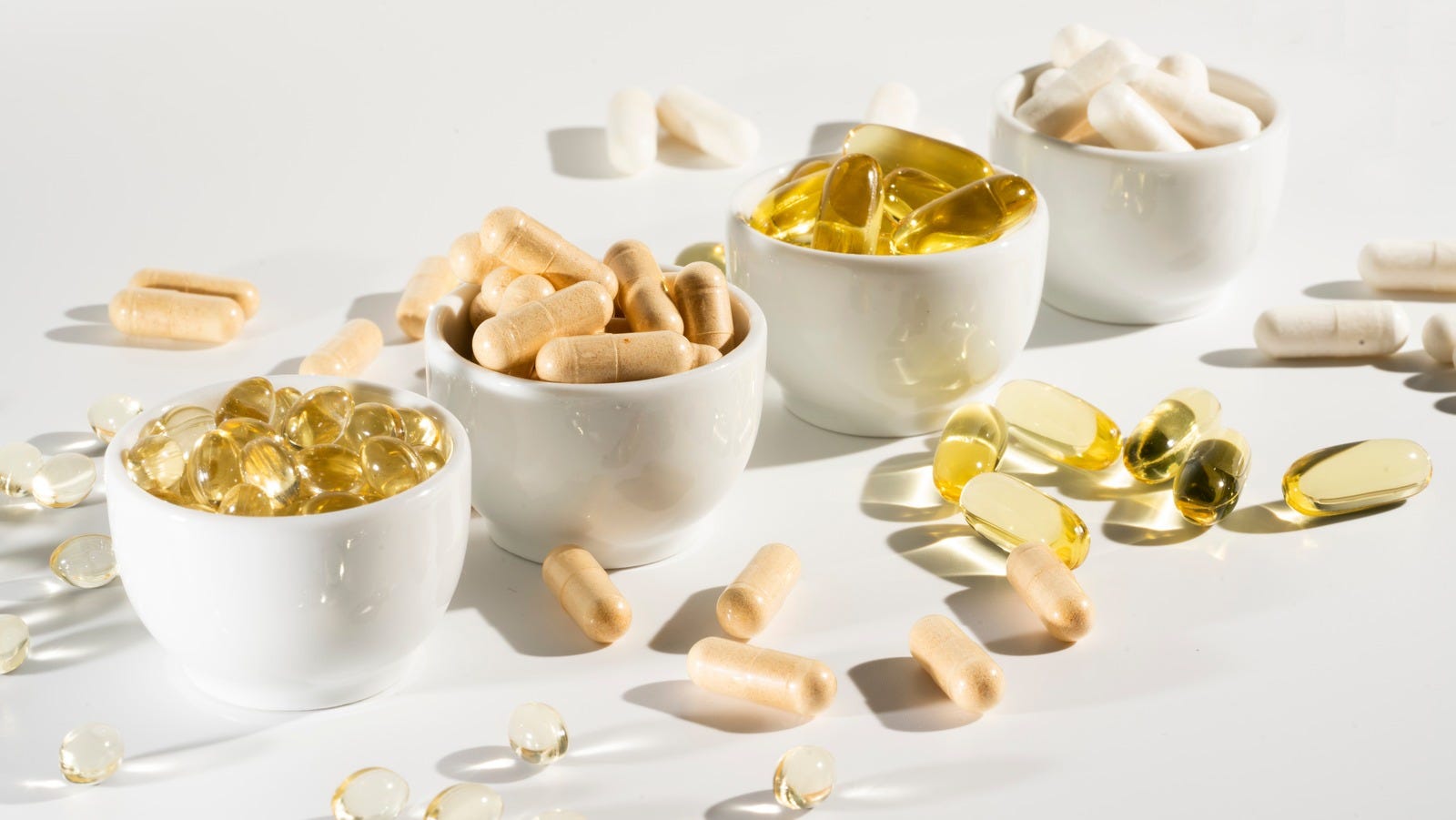
How to conduct supplementation review?
To effectively evaluate and prescribe a supplementation regimen we use a “Kidney Mode”: Initially, everything is "dumped out," prompting the crucial question: what truly needs to be added back?
I typically recommend halting all supplements but encourage a comprehensive analytical thought process. By adopting this strategy, healthcare professionals can make informed decisions about the necessity and efficacy of supplements for each patient, tailoring recommendations to their unique needs.
Most patients don’t know what each supplement is for
Many patients don’t have a clear reason for why they are taking certain supplements.
Common responses when asked why they take a supplement:
“I saw someone on Instagram talking about it.”
“A doctor I trust recommended it, but I don’t really know why.”
“A friend or a family member recommended it to me.”
This lack of clarity reinforces the need for a structured evaluation. Not only is this approach expensive but there is also clear evidence that it can be harmful. Especially if you take more than 5 supplements at once (or one supplement with multiple ingredients).
Supplements vs Pharmaceuticals (Prescription medicines)
In the world of health and wellness, there exists a significant divide between those who advocate for the use of natural supplements and those who trust in the efficacy of pharmaceuticals.
This debate often hinges on personal beliefs and misconceptions, as some individuals declare, “I don’t believe in taking medicine—only natural supplements.” There are however some fundamental differences between these supplements and pharmaceuticals. And it is critical that you understand them.
The primary distinction between supplements and pharmaceuticals lies not in their effectiveness or safety, but in their regulation. Supplements are NOT subjected to the same rigorous oversight as pharmaceuticals.
It means that the manufacturers DO NOT need to show that they work, and only need to document a minimum safety standards.
Supplements in the US are generally classified as "GRAS" (Generally Regarded as Safe) by the Food and Drug Administration (FDA). However, this classification does not entail any meaningful process of validation; it can be clearly declared as such by the producer without any evidence.
In contrast, pharmaceuticals undergo a comprehensive and stringent multi-layers approval process to ensure their safety and efficacy. Efficacy must be proven (in at least 2 appropriately conducted clinical trials). Safety must be monitored constantly as long as the product is on the market. Registration of a substance as a pharmaceutical involves clearing numerous regulatory hurdles before they can be prescribed to patients.
In short:
Supplements:
Not regulated by the FDA in the same manner as pharmaceuticals.
Generally classified as "GRAS" by the FDA.
The process for determining safety is less rigorous and lacks formal oversight.
Producers do not need to monitor safety
Producers do not need to prove that supplements work or have any meaningful benefits
Pharmaceuticals:
Undergo a very stringent approval process to ensure safety and efficacy.
Must clear multiple regulatory hurdles before being prescribed to patients.
Must be proven to work
Safety must be monitored as long as the medicines are available on the market
Interestingly, some supplements contain active ingredients that are also found in prescription medicines. A pertinent example is red rice yeast, which contains compounds similar to those in statins, a class of drugs used to lower cholesterol levels.
Some patients might refuse to take a statin such as pravastatin to lower ApoB, opting instead for red rice yeast, perhaps unaware that high doses of red rice yeast can function similarly to a modest dose of pravastatin.
This scenario highlights a key lesson for consumers: the natural vs. pharmaceutical distinction is misleading!
Understanding the nuances in regulation and ingredient overlap can empower individuals to advocate effectively for their health needs, breaking free from assumptions and embracing a balanced approach to wellness.
How to evaluate supplements?
There are six key questions you must be able to answer when evaluating if you (or your patient) needs a supplement:
Are you correcting a deficiency?
Why are you taking this supplement? Are you correcting a deficiency (i.e., replacing something your body lacks)? Are you trying to achieve supra-physiologic levels in hopes of enhancing function
For example: vitamin D to correct a deficiency vs. taking creatine to achieve supra-normal levels to increase muscle strength?
Are you taking it for lifespan or healthspan?
Is the supplement intended to improve your lifespan (increase longevity; reduce disease risk), healthspan (improve physical performance, cognition, emotional health), or both (like fish oil for cardiovascular health)?
Are you targeting a specific disease?
Are you reducing risk of heart disease or neurodegeneration?
For example: are you taking statins for prevention of cardiovascular death?
‼️ Many supplement manufacturers claim certain properties of their products, but „forget” to mention that they don’t work in the way they are administered!
For example: Berberine is advertised often as a „plant based” medicine that lowers blood sugar in diabetics. It is true, if given as intravenous injection (risky!), but does not work given as a tablet (berberine is not bioavailable when taken orally - it gets digested and nothing ends up in blood, therefore ot will not lower blood sugar levels and can be dangerous if you replace prescription medicines with falsely advertised supplement.
Similarly - collagen or hyaluronic acid work when they are injected, but not when given orally (digested and not absorbed) or given as a cream (molecules are too large to cross the skin barrier). They are advertised as beneficial for joints and skin - which is technically correct… but they will not work at all. They are also advertised as safe… which is technically correct too! They don’t get absorbed, there is no effect, therefore there is no toxicity.
Dirty advertising? Yes. But many people fall for this, and many others make fortunes on your ignorance.
Which biomarker are you tracking to know that the supplement is having the desired effect?
Is there even a biomarker to track effectiveness? Or have you been sold something and told to “feel the effects”? A biomarker allows you to measure whether a supplement is working as intended.
For example: Omega-3 index for fish oil effectiveness; 25-hydroxy vitamin D for vitamin D levels; creatinine levels for kidney function when taking creatine.
If no biomarker exists, effectiveness must be judged subjectively or indirectly. Be very careful if there is no biomarker - it is likely that the supplement does not work at all.
What is the mechanism of action?
How does the supplement work? Understanding how a supplement functions in the body helps assess its potential benefits and risks. The stronger the understanding of its action, the more confidence one can have in using it.
What is the risk/benefit ratio?
How do the risks compare to the potential benefits? What are the side effects? What is the magnitude of effect (how much benefit you can reasonably expect)? How to assess the quality of the supplement itself (manufacturing, purity, contamination risks)? Was the supplement third-party tested?
For example:
Low risk, high reward: Creatine monohydrate (strong evidence, minimal risk).
Unclear risk-reward ratio: Some herbal supplements with limited human data.
High risk, low or no reward: many supplements can shorten your life (excess vitamins) or even speed up development of cancers (NMM, vitamin A, white wine extracts, beta-carotene, additives added to many supplements).
Today we will evaluate supplements that have proven positive effect (when administered appropriately). You might be surprised how few of them have been actually shown to work.
If you are taking anything else, it most likely does not work. Some supplements (such as NMN or Multivitamins) may even shorten your life!
Jump to: Creatine, Fish Oil Supplements, Vitamin D, Group B Vitamins, Ashwagandha, Magnesium, Colostrum.
