
Corporate Performance is exactly that. A performance...
Part I - Doctor's reflections on 15 years in the pharmaceutical industry.


I have trained as a surgeon. Partially, because I didn’t pay attention in the medical school (so didn’t know enough to become a good GP). But primarily, because I believe in what the world largely ignores: practical solutions, applied knowledge, skill building, and actions that give tangible results.
After over a decade of clinical work, I have taken a decision to leave my lucrative private ENT practice, and swapped hospitals for corporate offices. I wanted to prevent diseases, rather than treat them.
My second board certification was in Pharmaceutical Medicine - designing, discovering and developing new medicines, vaccines and treatments, some of which will hopefully become available to patients in several years. Now my decisions no longer impacted individuals. They impacted entire populations.
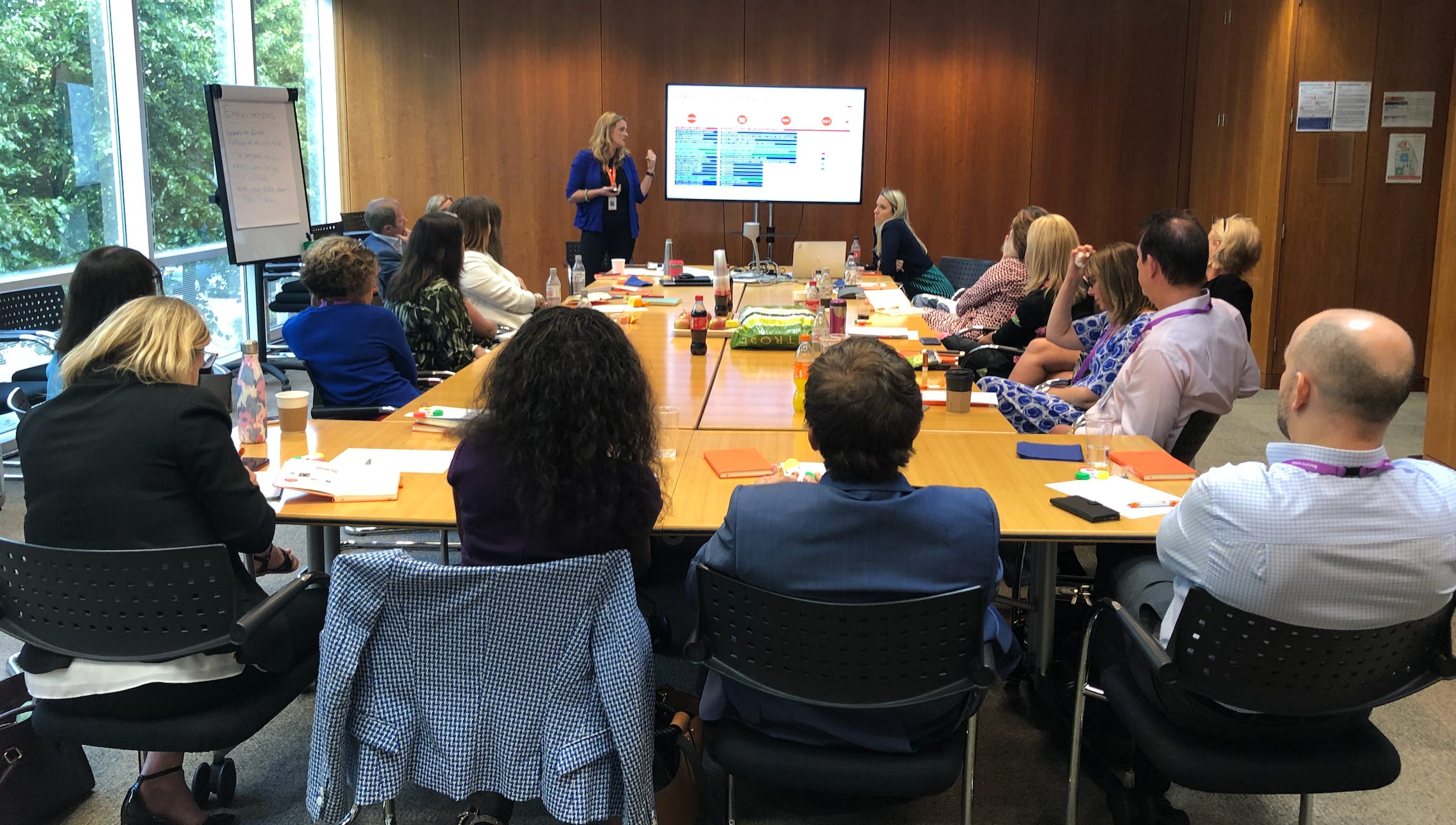
The transition from the operating theatre to a desk allowed me to swap the 24-hour, never-ending, high-pressure job, into a stable, predictable, 9-5 office-based employment.
Yes, it paid a lot less, but it freed up the most valuable resource we have - time. A lot of time. Time that I was previously giving away. Time for family, hobbies, interests, growth and exploration.
The career in the corporate world was interesting for a surgeon. It was also… easy. Most problems were imaginary. Most “challenges” were engineered. Most communications were superficial. Nobody died. No decision was truly critical or irreversible.
There were no real emergencies. For most, however, the work felt hard, stressing, high-stakes, rushed, critical or exhausting.
At the same time, I have met some amazing people - full of passion, ambition, drive and knowledge. They taught me a lot about others and about myself. They showed me how to “perform” in the business world, and why it matters to those around you. I made life-long friendships, travelled the world, worked on medicines and molecules that many people will never eve hear about. I have made decision that impacted hundreds of thousands of people - some of them still feel scary!
I started to wonder: “What can I do to bring what I learned in hospitals to people living and breathing the corporate life”.
Surgical training teaches you virtually everything you will ever need to thrive in corporate world.
Now, together with Sara, we teach people how to achieve more by doing less, how to rapidly advance, get promoted, influence others and see things for what they really are - without anxiety or distress. We teach how to prioritise, recover and achieve in a day what takes others weeks. Without burnout.
But one thing I could never truly make peace in the corporate world with was…
Yet another f*cking meeting…
I am at absolute war with scheduled business meetings. Not because I'm antisocial (well, maybe a bit). But because they stand in direct opposition to everything that I learned about performance in my clinical years.
I was at war with meetings and thoughtless meeting organisers since my first year in the industry. Here is why:
I really dislike inefficiencies. Our only true resource is time. Everything we do (or not do) costs us time. Many of us don’t want to spend money to save time… without realising that they pay (literally) with their life for delays…
Why treat something with pills for 10 years without improvement, if you can cut it out in 30 minutes?
Why spend 2 hours in a gym, when you can get the similar benefits in 15 minutes?
Why spend 3 hours on ward rounds, while you can do structured SBARs in 20 minutes?
Why spend years in therapy when you get the same outcome in an afternoon?
Why hand-wash dishes for 40 minutes, when you can put them in the dishwasher in 5?
Why try to figure everything out yourself for decades years, when you get a mentor or a coach and get there in weeks?
Why spend months looking for jobs, if there are ways for reciters to come to you the next day?
Why go to an hour long meeting, if a text message would do?
Learn and implement. Don’t waste life on those who don’t get it.
It took me three months in the corporate world to start tracking every communication method against its outcome: in-person meetings, video calls, teams messages.
All that kind of shit…
Here's what I found:
9/10 of my hour-long meetings could have been a 60 second call
8/10 of my calls could have been an email
Half my emails could have been a text
The average corporate meeting in pharma? Sixty (60!) long, agonising minutes. The actual problem-solving? 30 seconds. The other 59.5 minutes?
Theatre. Performance. Show & Tell.
I am sure there is a place for corporate theatrics.
But not in every f*cking meeting…
Small talk, 28 minutes talking about the wrong thing, repetition and people talking because they find silence awkward. Someone talking, because they never shut up. Someone else is forced to talk, even if they have nothing to add. Those who actually have something to add - stay silent… And 9 out of 10 times the organiser didn’t even invite the decision makers to the room…
Three, 1-hour meetings per day, 5 days per week. Conservative estimate. 15 hour a week, 70 hours a month. That’s almost 850 hours per year, which equals to 110 full working days per year…
A third of your “work”.
Lost forever.
The actual price?
30% of your life… Your corporation doesn’t care. But you should.
Meetings experiment
For one month, whenever someone wanted to "hop on a quick call," I'd respond: "In the interest of both your time and mine, let's try and do this over WhatsApp instead."
Here's what happened:
What took an hour in a meeting literally can take on average 122 seconds (seconds, FFS) ina short call or over a few messages.
69-slide PowerPoints became 2 paragraph emails.
Project updates became changes of a coloured cell in Excel…
Within the first year, I have learned to save 15-20 hours a week, on most weeks, just by not going to most of the meetings.
This is HALF of an average working week. This is half of your adult life!!!
And it doesn’t mean I worked less. I have won top performer awards in virtually every company. I never had a year where I didn’t overdeliver on all my objectives. I never missed a deadline… And it took me 80% less time that it would otherwise take.
The first gain was time….
The second gain - cognitive energy.
Your brain has a daily decision budget - which we call cognitive reserve. When you burn it on unnecessary meetings, and there's nothing left for actual thinking or for meaningful work.
Which means you solve less problems in worse ways.
You “work” more, output less, produce worse results. This costs you your promotions, your progression, your success and your sanity. And most people never even notice it.
Since my second year in business, I started teaching people how to identify and protect the most important assets they have - their mental reserves and attention.
The winning formula
If you have recently started a career in a business environment, here are my best recommendations:
When is meeting required?
Only in situations where body language and trust-building matters. Maybe 5% of what you think. Usually critical negotiations, performance conversations, breaking bad news, direct manipulation/motivation of an individual or a group.
What needs a call?
More emotional and sensitive conversations. Private phone. Secured number. Encrypted connection. No exceptions.
What needs a voice memo?
When you need to add a greater feeling of connection and human context: quick questions, updates, when providing feedback, etc.
When is text or email enough?
Information transfer. Yes/no decisions. FYIs. Everything else.
The 5-Minute Rule
If the discussion can be handled in 5 minutes or less asynchronously (voice note, email, text), it doesn’t need a meeting. 99% of things can be solved that way.
Parkinson's Law says work expands to fill time available. Give it month - it takes a month. Give a meeting an hour, it takes an hour. Even if you could have solved it in 5 minutes.
And what about those 55 wasted minutes?
That's not time lost. That's your life lost. It is a tax on your entire life.
Time is your only true resource.
Who controls the time, controls.
- KGB Training Manual
We have access to technology that didn’t exist 10 years ago, yet most of us still follow business traditions from 50 years ago.
Some of the technology made things worse. If a short memo or a text has been theatrically expanded by AI into a long message - you already know who to fire next.
Next time someone says “Can we hop on a call?”, “Let’s schedule some time to connect.”, “Can I put some time in your diary?”, “Can we take this offline?”, “I’ll schedule a follow-up.”…
Give them a quick and resounding: “No”.
Unless you’re a total masochist, I know nobody actually enjoys this torture! But everybody pretends they do…
After all, business is all about… performance, right?
About the Authors:
Maciej D. Zatonski, MD, PhD is a double board-certified physician, author, husband, and parent. He is an executive leadership coach specialising in cognitive performance, decision-making, and resilience under pressure and in complex, demanding environments.
Sara L. Farwell, PhD, is a cognitive scientist, certified nutrition coach and physical fitness instructor, and mentor to professions and students. She studies and writes about physiology, energy, recovery, and the mind–body axis for sustainable performance and change.
References
Allen, T. D., Eby, L. T., Poteet, M. L., Lentz, E., & Lima, L. (2004). Career benefits associated with mentoring for protégés: A meta-analysis. Journal of Applied Psychology, 89(1), 127–136.
Baumeister, R. F., Bratslavsky, E., Muraven, M., & Tice, D. M. (1998). Ego depletion: Is the active self a limited resource? Journal of Personality and Social Psychology, 74(5), 1252–1265.
Baumeister, R. F., & Vohs, K. D. (2007). Self-regulation, ego depletion, and motivation. Social and Personality Psychology Compass, 1(1), 115–128.
Cohen, M. A., Rogelberg, S. G., Allen, J. A., & Luong, A. (2011). Meeting design characteristics and attendee perceptions of staff/team meeting quality. Group Dynamics: Theory, Research, and Practice, 15(1), 90–104.
Cornell, P., Townsend Gervis, M., Yates, L., & Vardaman, J. M. (2014). Impact of SBAR on nurse shift reports and staff rounding. MEDSURG Nursing, 23(5), 334–342.
Eby, L. T., Allen, T. D., Evans, S. C., Ng, T., & DuBois, D. L. (2008). Does mentoring matter? A multidisciplinary meta-analysis comparing mentored and non-mentored individuals. Journal of Vocational Behavior, 72(2), 254–267.
Geimer, J. L., Leach, D. J., DeSimone, J. A., Rogelberg, S. G., & Warr, P. B. (2015). Meetings at work: Perceived effectiveness and recommended improvements. Journal of Business Research, 68(9), 2015–2026.
Kuijpers, E., Pickett, J., Wille, B., & Hofmans, J. (2024). Do you have a minute? Investigating the cognitive costs of work interruptions. Journal of Occupational Health Psychology, 29(2), 89–104.
Leach, D. J., Rogelberg, S. G., Warr, P. B., & Burnfield, J. L. (2009). Perceived meeting effectiveness: The role of design characteristics. Journal of Business and Psychology, 24(1), 65–76.
Leroy, S., & Glomb, T. M. (2018). Tasks interrupted: How anticipating time pressure on resumption of an interrupted task causes attention residue and low performance on interrupting tasks and how a “ready-to-resume” plan mitigates the effects. Organization Science, 29(3), 380–397.
Luong, A., & Rogelberg, S. G. (2005). Meetings and more meetings: The relationship between meeting load and the daily well-being of employees. Group Dynamics: Theory, Research, and Practice, 9(1), 58–67.
Milkman, K. L., Chugh, D., & Bazerman, M. H. (2009). How can decision making be improved? Perspectives on Psychological Science, 4(4), 379–383.
Parkinson, C. N. (1955, November 19). Parkinson’s Law. The Economist, 177(5856), 635–637.
Perlow, L. A., Hadley, C. N., & Eun, E. (2017). Stop the meeting madness. Harvard Business Review, 95(4), 62–69.
Rogelberg, S. G. (2019). The surprising science of meetings: How you can lead your team to peak performance. Oxford University Press.
Rogelberg, S. G., Leach, D. J., Warr, P. B., & Burnfield, J. L. (2006). “Not another meeting!” Are meeting time demands related to employee well-being? Journal of Applied Psychology, 91(1), 86–96.
Rogelberg, S. G., Scott, C., & Kello, J. (2007). The science and fiction of meetings. MIT Sloan Management Review, 48(2), 18–21.
Shanafelt, T. D., Boone, S., Tan, L., Dyrbye, L. N., Sotile, W., Satele, D., West, C. P., Sloan, J., & Oreskovich, M. R. (2012). Burnout and satisfaction with work-life balance among US physicians relative to the general US population. Archives of Internal Medicine, 172(18), 1377–1385.
Williams, B., Cargill, A., Lansdown, M., & Tan, J. (2021). E-handover in surgery improves clinical efficiency and adherence to COVID-19 infection control measures. Cureus, 13(3), e13967.
Yang, L., Holtz, D., Jaffe, S., Suri, S., Sinha, S., Weston, J., Joyce, C., Shah, N., Sherman, K., Hecht, B., & Teevan, J. (2022). The effects of remote work on collaboration among information workers. Nature Human Behaviour, 6(1), 43–54.