
How Therapy May Harm You
The Questions the Mental Wellness Industry Refuses to Ask


There is a parable buried in the history of mediaeval polish capital (Cracow) that speaks directly to the mental health crisis of our time.
In most mediaeval cities, beggars served a recognised social function. They prayed on behalf of those too busy to pray for themselves, and in exchange received alms from a community that needed them to exist. It was, by the standards of the age, a kind of a well-functioning transactional relationship.
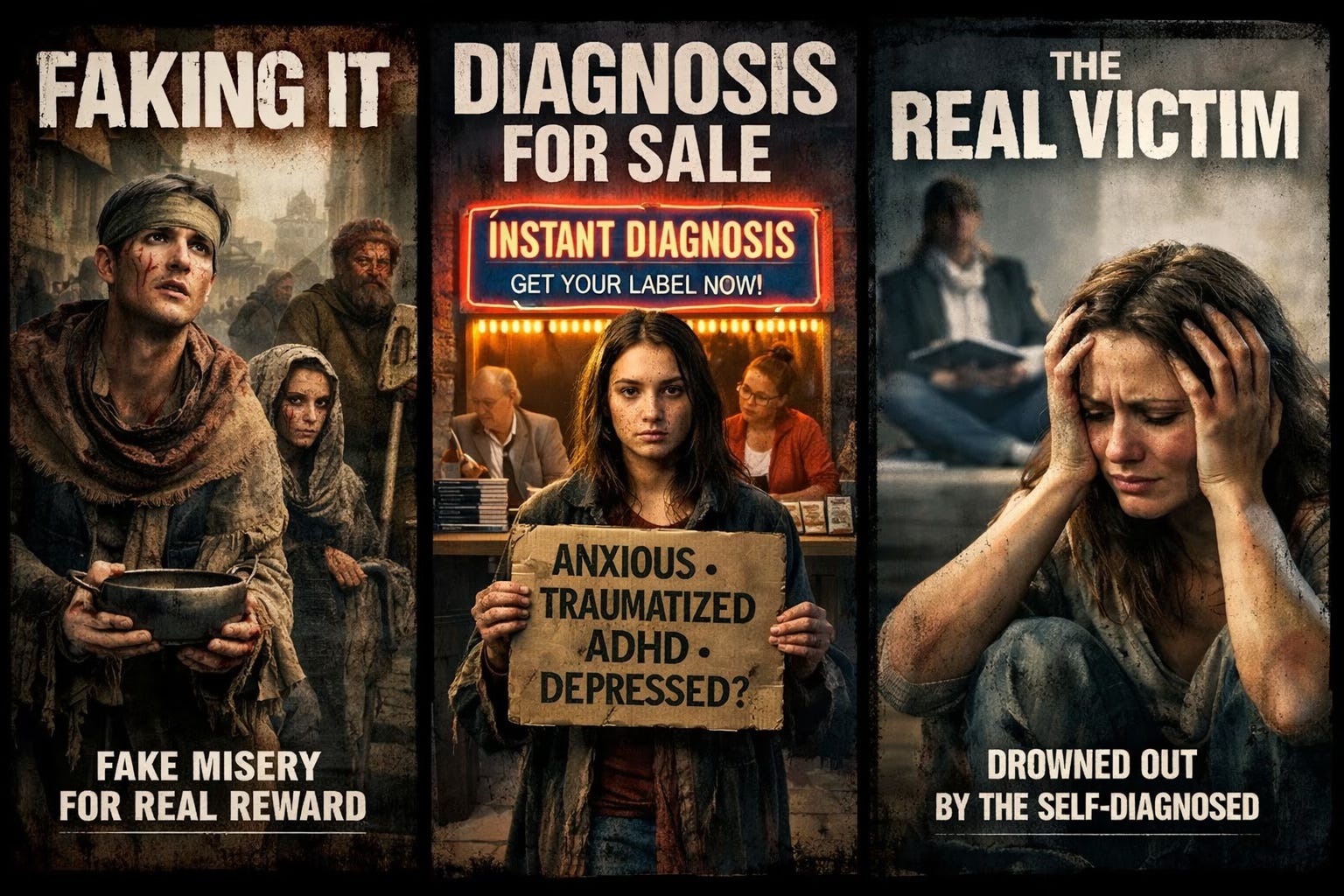
But because the role of the beggar was coveted, healthy people began to simulate illness. They painted sores on their faces. They bound their limbs to mimic amputation. They performed suffering convincingly enough to earn the compassion that genuine sufferers had always relied upon.
The city’s response was pragmatic and, by some measure, ruthless. Kraków’s town councillors capped the number of permitted beggars at around 20-25% (!) of the actual population at need, and established a guild to verify claims of people’s claimed incapacity.
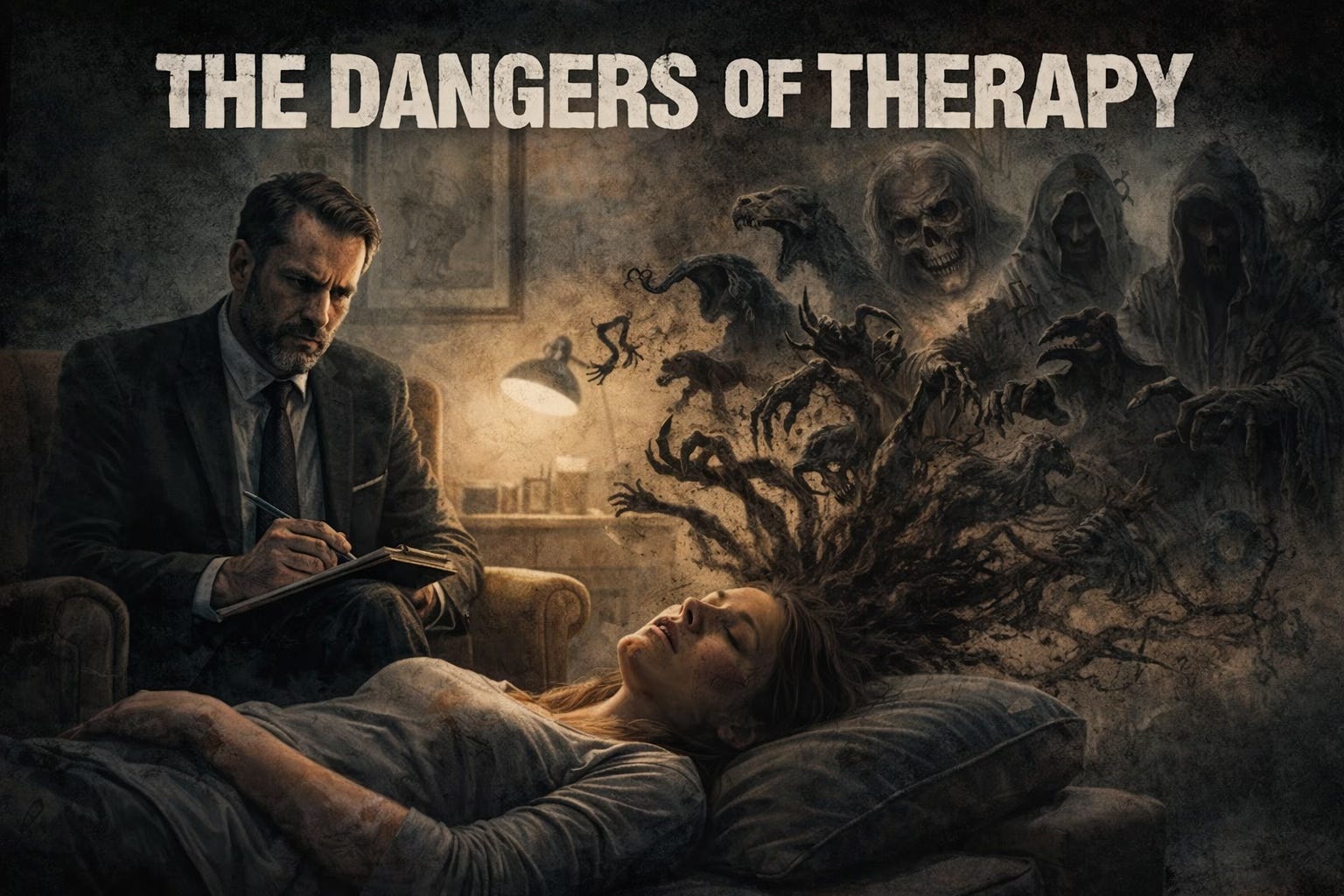
When modern mental diagnostic terms like depression, trauma, narcissism, and attention disorders proliferate without rigour, something similar to the mediaeval fraud begins to occur.
And the people who suffer most are those who are genuinely ill.
The problem with popular diagnoses
True mental illness is not imaginary. It is that the language used to describe it has become so stretched and so fashionable that it has lost its capacity to distinguish normal variations in mood or distress from disorder, normal unhappiness from clinical suffering.
The proliferation of self-diagnosis is part of this.
Social media has reduced stigma around conditions like ADHD, autism, depression, and anxiety, which can lead more people to seek assessments, but not all information online is accurate, and self-diagnosis based on superficial understanding can result in misdiagnosis, unnecessary anxiety, and inappropriate treatment.
The consequences of “diagnostic inflation” spread in ways that are rarely discussed openly. Research into diagnostic “concept creep” suggests that diagnostic labelling may reduce the control people are perceived to have over their problems, and reduce the perceived likelihood of their recovery from them. In other words, a label intended to validate suffering can, paradoxically, entrench it1.
Meanwhile, overdiagnosis wrongly frames non-pathological distress as illness and can potentially lead to adverse effects such as misunderstanding, self-alienation, and marginalisation2.
When everyone on the internet claims a diagnosis, those who carry genuine diagnoses face a subtler but real erosion of credibility: we will soon look at every person with one of these popular diagnoses as a potential fraud.
And the people who actually need help will be the casualties…
The ghost problem: iatrogenic harm in psychotherapy
There is a word almost nobody in the “therapy industry” likes to use: iatrogenesis.
In medicine, it refers to harm caused by the treatment itself. The damage caused by the treatment includes the medication’s side effects, or the complications of a surgical procedure.
In most countries, in the medical setting the iatrogenic harm is openly discussed. But for psychological interventions it is almost never mentioned, hardly ever studied, or actively avoided.
However, the rare studies of harms of therapy show clearly that approximately 15% of individuals who participate in psychosocial interventions may be worse off after treatment than before3. When we combine it with very low true effectiveness of psychotherapy for most individuals - we get primarily harm, without virtually any benefits.
The problem of adverse effects of psychotherapy has been recognised for decades, yet research on causes and prevention of harm has failed to progress, with confusion between different definitions and a lack of systematic recording and reporting (Parry, Crawford & Duggan, 2016).4
When working on the book, I have searched hundreds of databases and books on iatrogenic harm in psychotherapy. I have found almost none. The problem is not invisible in the data because it has been studied and cleared…
It is invisible because it has barely been studied at all.
And yet the estimates that do exist are not reassuring.
Conservative figures suggest that 10-20% of therapy patients experience deterioration during treatment, not improvement. This matches what the peer-reviewed literature shows in adjacent areas. Estimates suggest 5% of therapy patients experience lasting negative outcomes, often underreported in studies.
And let’s don’t forget that they are rarely more effective than a conversation with stranger in a local pub…
It is becoming clear that psychological treatments cannot be at once psychoactive and harmless: just as effective medical treatments carry risks and toxicity. Yet patient safety has not been a priority for psychological therapy researchers.
Research found comments in trial protocols such as “no adverse events or serious adverse events will be recorded or reported in this study,” demonstrating how rarely psychological interventions formally monitor for harm [4].
The contrast with pharmacology or medicine is stark. When a drug causes deterioration in 10-20% of patients, it will be immediately picked up by regulators and rather quickly withdrawn from use...
When a talking therapy does the same, the therapeutic industry largely looks the other way.
Who is guarding the therapists?
To become a therapist or psychologist in most countries, no psychological screening is required. At all.
This is quite ironic.
For example, in most countries you must pass a psychological assessment to obtain a firearms licence, but the people issuing those assessments are themselves unscreened.
Often, completely unregulated as well. This should scare you…
Decades old research showed clearly that psychology attracts students with significantly higher-than-average levels of dominance as a personality trait. This means they are much more likely to have a tendency to seek control over others in relationships.
While these findings require updating, they highlight that the direction of the concern is legitimate.
Iatrogenic symptoms in therapy may originate through the over-reliance on a belief system within which therapists interpret, reinterpret, or label clients’ characteristics or distress as pathological. Therapeutic communication that emphasises pejorative language may introduce clients to this belief system5.
What does the harm look like?
The mechanisms by which a therapist can harm are not always dramatic. They are often subtle and slow. They include the progressive undermining of a patient’s capacity to function independently.
This is one of the clearest red flags in any therapeutic relationship: a growing inability to make decisions without first consulting your therapist. Not the wish to share difficult things, but the compulsion to seek permission before acting.
“If, when you are with a patient, you feel you must contact your therapist to make a decision, that is the first signal you are entering the phase of therapist dependency.” — Dr Tomasz Witkowski
When therapists also cultivate guilt (suggesting the patient is not trying hard enough or not engaging seriously with the process) the dependency deepens. The patient’s own judgement is systematically discredited, and the therapist’s interpretation becomes the only valid one.
The recording question: fear of transparency
In 1993, a close friend of mine, during his research fellowship in Germany, attended a meeting of therapists that he has never forgotten. Each one arrived carrying a shoebox. The boxes were full of cassette tapes.
Every single therapy session those practitioners conducted was recorded, as this was required by the health fund that paid for the treatment.
Let’s contrast this with the majority of psychotherapeutic practices today. How many of your sessions were recorded by your therapist? Have you attempted to record your own sessions (for entirely benign reasons, such as simply wanting to review what was discussed)?
The response from therapists is typically one: outrage.
I find this fascinating, as recording of surgical procedures is a routine practice in clinical medicine: it helps to learn, analyse, improve, as well as serving as a proof of what was done during the intervention.
Isn’t outrage a rather peculiar response for a practitioner with nothing to hide? In our coaching practice we encourage people to take notes. We even provide them with further reading material (fully referenced) for further study…
Furthermore, we believe that writing (using pen and paper) is a critical tool for capturing thoughts, slowing down and organising thinking processes.
Why would anyone be opposed to it?
Therapeutic confidentiality is an obligation binding only the therapist, not the patient. The patient is free to document, talk about, and share their own experience. A therapist who resists that is, at minimum, raising a question that deserves to be asked.
The myth that will not die: childhood as destiny
Of all unhelpful, but very popular false narratives, that sells easily and roots people in the past and prevents them from moving forward with their life, while creating dependance on the therapist, is the myth that childhood is the master determinant of adult psychological life.
The view that everything is shaped in the early years, that parental failures are the root of adult pathology, and that therapy must dig into childhood to resolve adult problems.
The is not to be dismissive of childhood experience entirely. But it’s almost mythological, religion-like status has to be contested.
In our practice we help people with post-traumatic stress disorder. A genuine PTSD requires a specific clinical picture: intrusive flashbacks, both waking and in sleep, that are vivid and disruptive enough to prevent normal functioning.
When that clinical picture is present, engagement with the traumatic material is warranted and professionally guided processing is appropriate.
However, for the vast majority of people, the expansive cultural use of “trauma” to describe any difficult experience from the past, and the therapeutic habit of treating those experiences causes primarily harm.
George A. Bonanno, professor of clinical psychology at Columbia University. In his book “The End of Trauma” Bonanno presents decades of research on how people actually respond to potentially traumatic events.
Bonanno argues that we vastly underestimate how resilient people really are, provided that they will not fall into the hands of therapists…6
A meta-analysis by Bonanno and colleagues of 54 studies confirmed that 65 per cent of people showed a trajectory of few or no symptoms of psychopathology following potentially traumatising events. Not a minority. A considerable majority.
Bonanno has also argued that universal counselling after potentially traumatic events does more harm than good, a point eventually verified by convincing research, because offering treatment to otherwise well people can produce the symptoms they hope to avoid. Especially, when a “diagnosis” relies only on subjective mood…
So where, then, do all the stories of childhood damage come from?
Therapists are powerfully motivated to inhabit and sustain such narratives. They excavate childhood histories willingly, reinforce the idea that early events determine everything, and confirm patients in interpretations that serve the therapeutic relationship but may not serve the patient.
But if you completed elementary education, you will surely recognise what repetition is… It is learning. In the cases of “exploring past traumas” it is simply learning to be helpless, dependent, and having personal identity tied to a past event7.
One more thing requires your attention… “Trauma” is relative. For one, it might be repeated rape, or physical abuse by a drunk parent. For others, it might be getting the wrong colour Mercedes for 16th birthday… Why? Become subjectively, for those 2 individuals both events could be described as “the worse experience of my life”.
Therapists are therefore very eager to occupy such histories, very eager to dig them up, and very eager to consolidate people in the belief that this determines people’s whole lives. And people often accept these explanations.
Science calls this commercial practice in a very simple way: retraumatisation. Something that therapists actively avoid researching or talking about.
What the science of twins actually tells us
Against the narrative of childhood-as-destiny, let’s take a look at available evidence.
One of the most robust bodies of evidence in behavioural science comes from studying twins.
Identical twins share essentially all of their genetic material. When identical twins are separated at birth and raised in radically different environments: sometimes one in wealth and one in poverty, sometimes one in a functional family and one in a deeply troubled one.
The findings are consistently striking.
The heritability of human behavioural traits is now well established due to those classical twin studies. Research consistently finds that estimates of heritability of general intelligence range from 50 to 80 per cent, and personality from 20 to 50 per cent8.
Studies of separated identical twins reveal something that many clinicians find uncomfortable: twins who have never met often share the same interests, occupations, and psychological difficulties, suggesting deep genetic influence that persists regardless of upbringing.
The complementary finding, from studies of adoptive siblings, is equally telling. Children raised by the same parents, in the same home, eating the same food, attending the same schools, watching the same television, grow up to experience different psychological difficulties.
The shared environment explains less than we want it to. This means that assigning almost total causal power to parental behaviour or childhood circumstances is a very poor idea, because the science does not support that mythology.
But admitting that would mean a significant loss of income to the therapeutic lobby.
Any therapeutic model that systematically excavates childhood in order to explain present difficulties does not help. It is only reinforcing a narrative that is simultaneously false and harmful: that unchangeable past events are responsible for your current situation.
Convenient. Pleasant to hear.
And completely false…
Schools and workplaces are becoming quasi-therapeutic institutions.
With catastrophic effects…
As a father of 3 children educated in different systems (public, private, multiple countries) pseudoscientific practices that I have been introduced into curricula (as early as primary education) is staggering.
Nonsense ranging from kinesiology, to various kinds of “therapies” for anxiety, emphasis on labelling mood and framing it as a disease or problem that needs to be addressed, introduction of distracting devices, “Brain Gym” exercises, learning-styles classes, various types of intelligence, and tons of other unvalidated, “feel good” bullshit. In the UK it was even worse than it was in Eastern Europe.
But this is only small part of the wider problem. Schools are starting to prompt children and parents to seek medical treatment for normal childhood behaviours.
I have personally witnessed a school psychologist siding unambiguously with a teenager against a parent over the question of whether the teenager’s room needed to be kept minimally tidy.
This is not a joke…
The psychologist invoked the adolescent’s rights to their own space. The parent’s reasonable expectation of basic household standards was overridden. This is not acceptable, but schools and therapists have virtually zero responsibility for the damage they cause to children’s mental health.
When school psychologists position themselves as advocates for children against parents, rather than as partners working alongside both, they undermine the relationship between parents and children rather than supporting it. And they do so in the name of a “therapeutic” framework that may not reflect the best interests of the child’s long-term development.
On the marketplace of suffering
There is problem recognised in private clinical medicine in the EU (or in the entire US medical and healthcare system). Incentives.
In a service economy, sellers want to sell.
Psychotherapists and psychologists are no different. Their product sells better when it is wrapped in the language of emotional validation, deep understanding, and indispensable expertise.
It sells better when the client believes that recovery is impossible without professional guidance, and that untreated suffering will only deepen.
I stay away from therapy. I have no financial interest and I don’t benefit from criticising therapy nor from defending it. I have the luxury to stand outside the commercial structure of the world of psychotherapy.
This does not make me right. But it does change the nature of the conversation.
The science of resilience suggests most people can and do recover without any professional help. And for those that do not, digging in the past in not the answer.
It is surprising how many people who have been subjected to therapy in the past can not see the very obvious analogy:
If you lose a limb in a car accident, no amount of discussions about the accident, motives of the perpetrator, reasons why someone didn’t press on the brake sooner, or understanding exactly what happened will help the person move forward and adapt to the reality and move forward with their life.
The science of adverse effects shows that a significant amount of people are made worse by the “help” they receive.
And the economics of the industry suggest those findings will not be prominently advertised by those whose income depends on the consultation hour.
What this means for anyone considering therapy
None of this means that therapy is useless or that psychological suffering is not real.
The evidence base for cognitive behavioural therapy and its variants are of some clinical relevance in certain circumstances.
Genuine PTSD requires medical treatment.
Severe depression requires medical treatment.
Therapists who practise within the bounds of evidence-based approaches provide a service of real value.
What it does mean is that the consumer of mental health and wellness services deserves the same degree of caution that any informed buyer brings to any other market:
It means asking what the evidence base is for the proposed approach,
It means noticing whether dependency is being fostered or discouraged,
It means treating outright resistance to session recording as a potential warning sign rather than a professional norm to be respected,
It means clarifying how soon will you see the effects and what the outcome will look like,
It means recognising that a diagnosis can be the beginning of help, as well as the beginning of a seller’s narrative that serves the therapist more than it serves you,
It means noticing when there is no improvement or change after a few sessions.
After all, would you continue taking paracetamol for your “cluster headache” for 2 years if it wouldn’t make you any better, and only briefly made you feel better? Or would you look for another doctor to see if there is another problem?
It also means understanding that most people, most of the time, are more resilient than the mental health marketplace would prefer you to believe.
The mediaeval guild of beggars in Cracow did not abolish charitable giving. It protected it from those who would exploit it, so that those who genuinely needed help could continue to receive it.
Asking rigorous questions about mental health services is not an act of hostility toward the suffering. It is, if anything, the most important act of solidarity with them.
About the Authors:
Maciej D. Zatonski, MD, PhD is a double board-certified physician, author, husband, and parent. He is an executive leadership coach specialising in cognitive performance, decision-making, and resilience under pressure and in complex, demanding environments.
Sara L. Farwell, PhD, is a cognitive scientist, certified nutrition coach and physical fitness instructor, and mentor to professions and students. She studies and writes about physiology, energy, recovery, and the mind–body axis for sustainable performance and change.
Haslam, N., & McGrath, M. J. (2020). Effects of diagnostic labels on perceptions of marginal cases of mental ill-health. *PLOS Mental Health.* https://doi.org/10.1371/journal.pmen.0000096
Rosendahl, J., et al. (2021). Consequences of a diagnostic label: A systematic scoping review and thematic framework. *Frontiers in Psychology.* https://doi.org/10.3389/fpsyg.2020.606581
Moos, R. H. (2012). Iatrogenic effects of psychosocial interventions: treatment, life context, and personal risk factors. *Substance Use & Misuse, 47*(13–14). https://doi.org/10.3109/10826084.2012.705710
Parry, G. D., Crawford, M. J., & Duggan, C. (2016). Iatrogenic harm from psychological therapies: time to move on. *The British Journal of Psychiatry, 208*(3), 210–212. https://doi.org/10.1192/bjp.bp.115.163618
Boisvert, C. M., & Faust, D. (2002). Iatrogenic symptoms in psychotherapy. *American Journal of Psychotherapy, 56*(2), 244–259. https://doi.org/10.1176/appi.psychotherapy.2002.56.2.244
Bonanno, G. A. (2021). *The End of Trauma: How the New Science of Resilience Is Changing How We Think About PTSD.* Basic Books
Bonanno, G. A., Westphal, M., & Mancini, A. D. (2011). Resilience to loss and potential trauma. *Annual Review of Clinical Psychology, 7*, 511–535. https://doi.org/10.1146/annurev-clinpsy-032210-104526
Plomin, R. (2019). *Blueprint: How DNA Makes Us Who We Are.* MIT Press. See also: Johnson, W., Turkheimer, E., Gottesman, I. I., & Bouchard, T. J. (2010). Beyond heritability: twin studies in behavioral research. *Current Directions in Psychological Science, 18*(4), 217–220